Foods high in antioxidants, and what the numbers mean
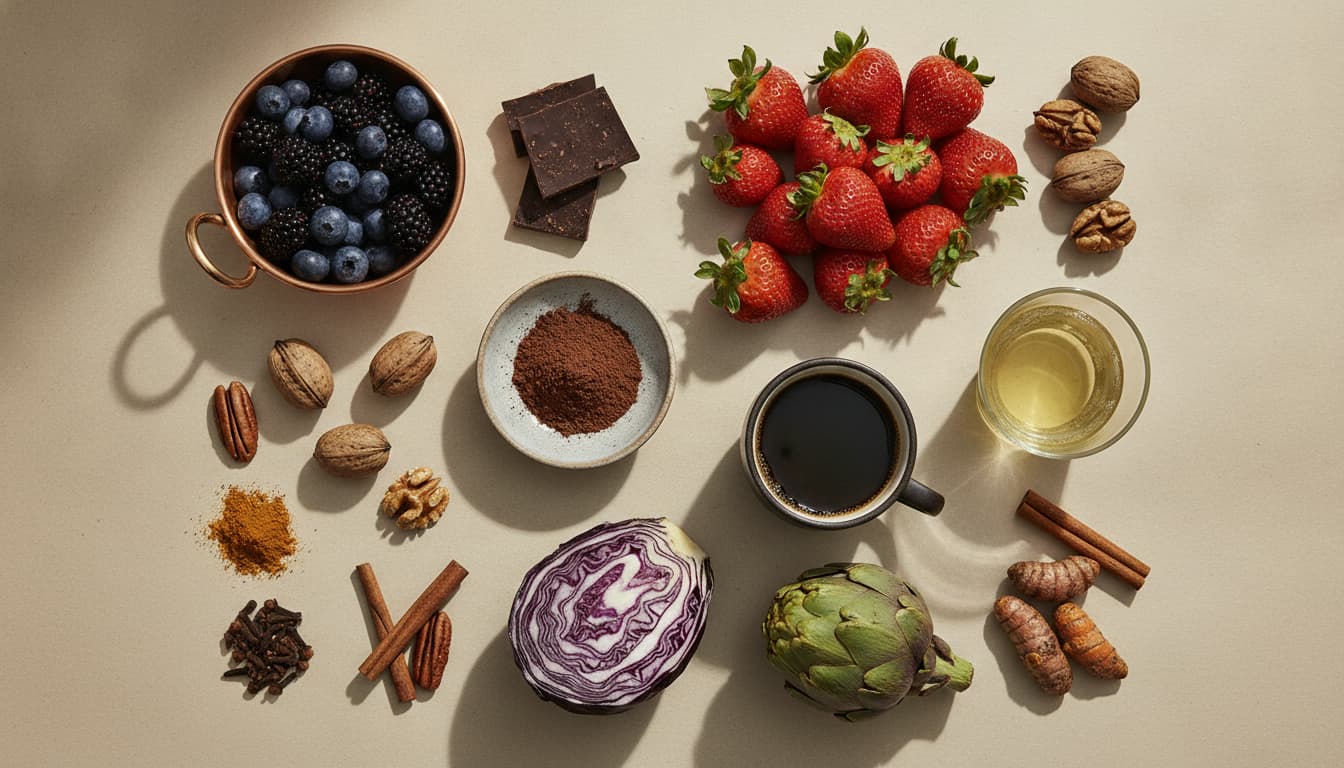
Spices, berries, dark chocolate, and coffee top the antioxidant charts, but the USDA withdrew its ORAC database in 2012 because test-tube antioxidant capacity does not predict what happens in the body. The highest-antioxidant foods by measured content, why high-dose supplements failed in trials, and what the evidence actually supports.
- 01
Herbs and spices: the most antioxidant-dense foods by weight
Dried spices are in a class of their own by concentration: cloves, cinnamon, oregano, turmeric, and ginger top the Antioxidant Food Table (Carlsen et al. 2010) far above any fruit or vegetable per 100 g. The catch is portion size, they are eaten in grams, not cups, so a teaspoon contributes a small absolute amount despite the huge density. They are still worth using freely, both because the amounts add up across a day of cooking and because compounds like the curcumin in turmeric are studied in their own right, but they are a seasoning strategy, not a reason to megadose. Concentration without portion is the reason ORAC rankings mislead.
- 02
Berries: the densest antioxidant food eaten in real portions
Blueberries, blackberries, raspberries, and strawberries are the highest-antioxidant foods most people actually eat by the cup, carrying dense anthocyanins, the pigments that make them deep blue and red, plus vitamin C (USDA FoodData Central). Wild and darker berries generally score higher than cultivated pale ones. Because berries are low in sugar for a fruit, high in fiber, and eaten in whole-cup servings, they deliver a meaningful antioxidant load with the whole-food matrix that trials suggest matters. Frozen berries retain their anthocyanins well, so the cheaper frozen bag is not a compromise on antioxidant content.
- 03
Dark chocolate and cocoa: flavanol-rich, sugar-limited
Cocoa is one of the richest dietary sources of flavanols, and dark chocolate at 70 percent cocoa or higher carries far more than milk chocolate, with unsweetened cocoa powder denser still (USDA). Cocoa flavanols are among the better-studied antioxidants, with trials showing modest effects on blood-vessel function, though the chocolate that delivers them also carries sugar and calories, so the useful source is a small square of high-percentage dark chocolate or cocoa powder stirred into food, not a bar treated as health food. Alkalized, or Dutch-processed, cocoa loses much of its flavanol content, so natural cocoa is the higher-antioxidant choice.
- 04
Nuts and seeds: vitamin E plus polyphenols
Pecans and walnuts rank highest among nuts on the Antioxidant Food Table, combining polyphenols with vitamin E, the fat-soluble antioxidant that protects cell membranes (Carlsen et al. 2010; USDA). Sunflower seeds and almonds are strong vitamin E sources specifically, overlapping with the vitamin-E food rankings. Nuts pair their antioxidants with healthy fats, fiber, and protein in a satiating whole-food package, which is part of why nut consumption is consistently linked with better health outcomes in cohort studies. A small daily handful is the sane serving; the calorie density means more is not better.
- 05
Coffee and tea: the largest real-world source
Coffee and tea are not the densest antioxidant foods per serving, but because of the volume people drink them, they are the single largest source of dietary antioxidants in most Western diets (multiple dietary-intake surveys). Coffee supplies chlorogenic acids; green and black tea supply catechins and other flavonoids. This is the clearest illustration of why per-portion intake beats per-gram density: an ordinary daily habit outweighs exotic high-ORAC foods eaten rarely. Both are calorie-free when unsweetened, and moderate coffee and tea intake is associated with neutral-to-favorable health outcomes, so they count as a genuine, effortless contributor.
- 06
Dark leafy greens and colorful vegetables
Spinach, kale, and other dark greens carry lutein, vitamin C, and vitamin E, while artichokes, red cabbage, beets, and red and orange peppers add polyphenols and carotenoids (USDA). Artichokes in particular score unusually high among vegetables. Cooking method matters both ways: light steaming preserves more vitamin C than boiling, while cooking tomatoes and carrots actually raises the availability of their carotenoids. These vegetables overlap heavily with the vitamin C and vitamin A food lists, which is the point, a plate built on deeply colored plants covers several antioxidant families at once without any single food doing all the work.
- 07
Beans, legumes, and whole grains
Small red beans, kidney beans, black beans, and lentils rank surprisingly high on antioxidant tables, carrying polyphenols alongside their well-known fiber and protein (Carlsen et al. 2010). They are the affordable, high-volume end of the antioxidant list, a cup of beans is cheap, filling, and contributes both antioxidants and the fiber that the whole-food benefit likely depends on. Whole grains add more modest amounts. Because beans are eaten in large servings and cost a fraction of berries or nuts per gram, they are the most cost-efficient way to raise dietary antioxidant intake, which fits the same $/nutrient logic that runs through the rest of this site.
How this was specified
- 01Inputs measured
- Retail price (dated) · label claim · Certificate of Analysis · third-party test (Informed Sport / NSF / ConsumerLab / Clean Label) · leucine per serving from COA, not marketing.
- 02Protocols tested
- Per-kg target from four literature ranges (IOM RDA, Phillips 2017, Morton 2018, ISSN). Brands scored against Moore 2015 leucine-per-dose threshold (~0.4 g/kg).
- 03Cost-basis verified
- $/gram of protein and $/gram of leucine at warehouse pricing (Costco), mail-order (Amazon), and DTC retail. Re-checked quarterly, flagged when drift exceeds 15%.
- 04Confidence level
- High on ranked order. Medium on absolute $/g (prices drift). Low on serving-size claims where COA is older than 18 months, flagged [VERIFY].
Every claim, cited.
- [01]National Institutes of Health, Office of Dietary Supplements. Antioxidant Supplements: What You Need To Know. High-dose antioxidant supplements not shown to prevent chronic disease; beta-carotene harm in smokers.
- [02]US Department of Agriculture, Agricultural Research Service. Withdrawal of the USDA ORAC Database for Selected Foods (2012). ORAC values have no demonstrated relevance to human health and were being misused.
- [03]Carlsen MH, et al. The total antioxidant content of more than 3100 foods, beverages, spices, herbs and supplements used worldwide. Nutrition Journal 2010. Antioxidant Food Table.
- [04]US Department of Agriculture, Agricultural Research Service. FoodData Central. Vitamin C, vitamin E, and polyphenol content of berries, cocoa, nuts, vegetables, and legumes.
The Larderlab Team builds evidence-led frameworks for eating, lifting, and stocking a kitchen. We cite every claim. We publish the spreadsheet when possible. We buy what we review at retail price. When new data lands, we revise with a dated note.
Next in this hub.
Foods High in Collagen: Why the Real List Is Shorter Than You Think
Collagen exists only in animal connective tissue, so no plant food contains any. Gelatin powder leads at 85.6 g of protein per 100 g, pork skin at 61.3 g. And the most-marketed source, bone broth, tested poorly against supplements.
8 min · rev 2026-08-24Foods High in Pantothenic Acid (Vitamin B5): The Densest Sources
The adequate intake is just 5 mg a day, and the vitamin's name literally means everywhere, because it is in almost all foods. The ranking, why deficiency essentially never happens, and why B5 supplements for acne and hair have thin evidence.
7 min · rev 2026-08-16Foods High in Chromium: The Sources, and Why the Data Is Thin
The adequate intake is just 35 mcg a day for men and 25 mcg for women, and broccoli, whole grains, meat, and nuts cover it. Why the food data is unusually unreliable, why deficiency is rare, and what the evidence really says about chromium for blood sugar.
7 min · rev 2026-08-16Get the Larderlab Macro Planner.
A Google Sheet that calculates your protein target, splits it across 3-5 meals, and ranks 20 protein sources by $/gram. Free. Copy-and-modify your own version.
By subscribing, you agree to our Privacy Policy. Unsubscribe anytime.