What magnesium is actually good for
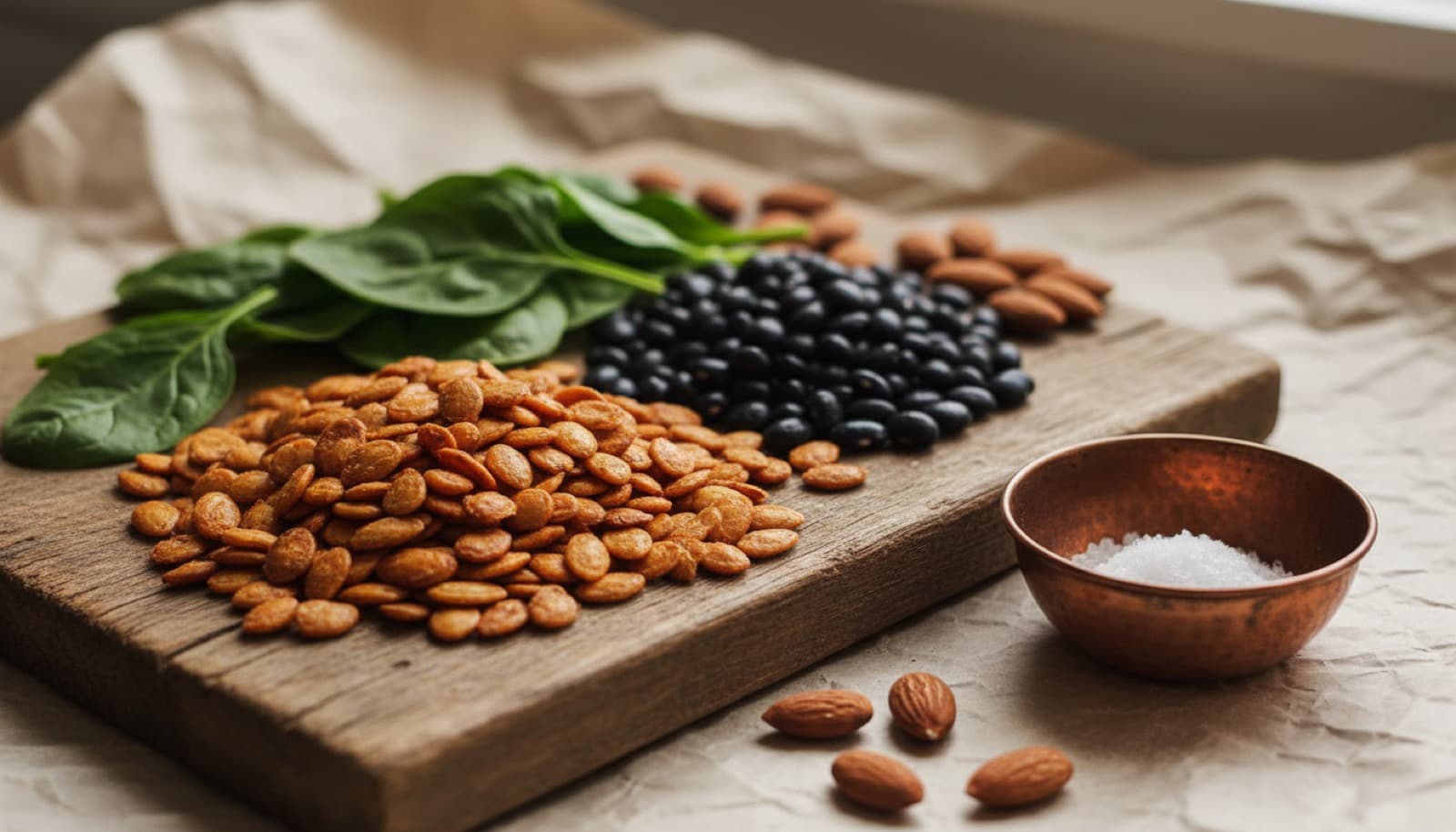
The strongest evidence is for blood pressure and glucose metabolism, with real but mixed support for cramps, migraine, and sleep. What magnesium helps, and how strong the evidence is for each claim.
What people ask us next.
- What is magnesium good for?
- Its best-supported benefits are lowering blood pressure (a modest ~2-4 mmHg systolic drop, larger in deficient or hypertensive people; Zhang 2016) and supporting glucose metabolism (Larsson & Wolk 2007). It has real but weaker support for muscle cramps, migraine prevention, and sleep. The common thread is that the benefit is largest when you start from a magnesium deficit, which ~48% of Americans do (NHANES). It is not a cure-all.
- Does magnesium actually lower blood pressure?
- Modestly, yes. A meta-analysis of 34 randomized trials found magnesium supplementation lowered systolic pressure by ~2 mmHg and diastolic by ~1.8 mmHg, with bigger effects in people who were deficient or hypertensive at baseline (Zhang et al. 2016). Magnesium relaxes blood-vessel walls and supports endothelial function. The effect is small and additive to diet and exercise, not a substitute for prescribed blood-pressure treatment.
- Is magnesium good for muscle cramps?
- It depends on the cause. Magnesium enables muscle relaxation, so a genuine deficit can drive cramps and correcting it may help. But controlled trials of magnesium for nocturnal leg cramps in the general population mostly fail to beat placebo. It is more plausibly useful when the cramps stem from an actual magnesium shortfall than as a blanket cramp remedy. Cover the RDA from food first.
- Is magnesium good for sleep?
- The mechanism is plausible, magnesium dampens the excitatory NMDA receptor and supports GABA, but the clinical evidence is low-quality with small effects, mostly in older or deficient adults (Mah & Pitre 2021). It is a reasonable, low-risk try if you may be running short on magnesium, not a dependable sleep aid. Glycinate is the form used at night; see our magnesium for sleep page for the dose and the evidence.
- Who benefits most from magnesium?
- People who start from a deficit. Across blood pressure, glucose, cramps, and sleep, the benefit is consistently largest when magnesium status is low and small or absent when it is already adequate. Risk is higher with high alcohol intake, GI malabsorption, type 2 diabetes, or long-term proton-pump-inhibitor or diuretic use. Since ~48% of Americans fall short from food (NHANES), covering the RDA is the reliable first step.
- Should I get magnesium from food or a supplement?
- Food first. Dietary magnesium arrives with fiber, potassium, and protein and carries no upper limit, because the gut self-limits absorption. The densest sources are pumpkin seeds, cooked spinach, black beans, quinoa, and almonds. Supplement only a measured gap, typically 100-200 mg/day, staying under the 350 mg/day supplemental upper limit. If you supplement, glycinate and citrate absorb far better than oxide; see our magnesium forms comparison.
Every claim, cited.
- [01]Zhang X, Li Y, Del Gobbo LC, et al. 2016. Effects of Magnesium Supplementation on Blood Pressure: A Meta-Analysis of Randomized Double-Blind Placebo-Controlled Trials. Hypertension 68(2):324-333. ~2 mmHg systolic, ~1.8 mmHg diastolic reduction across 34 RCTs.
- [02]Larsson SC, Wolk A. 2007. Magnesium intake and risk of type 2 diabetes: a meta-analysis. J Intern Med 262(2):208-214. ~15% lower risk per 100 mg/day increment.
- [03]Mah J, Pitre T. 2021. Oral magnesium supplementation for insomnia in older adults: a Systematic Review & Meta-Analysis. BMC Complement Med Ther 21(1):125. Low-quality evidence, small effects, concentrated in older/deficient adults.
- [04]Moshfegh A, Goldman J, Cleveland L, et al. 2009. What We Eat in America, NHANES. ~48% of the US population consumes less than the EAR for magnesium from food.
- [05]NIH Office of Dietary Supplements. Magnesium Fact Sheet for Health Professionals. RDA 400-420 mg/day (men), 310-320 mg/day (women); supplemental UL 350 mg/day; food magnesium has no UL.
The Larderlab Team builds evidence-led frameworks for eating, lifting, and stocking a kitchen. We cite every claim. We publish the spreadsheet when possible. We buy what we review at retail price. When new data lands, we revise with a dated note.
Next in this hub.
What to Avoid When Taking Collagen: Five Caveats With Evidence Behind Them
Do not count it toward your protein target, do not judge it before 8 to 12 weeks, and if you form kidney stones, know that 30 g of gelatin raised urinary oxalate by 43 percent in a controlled study. The real caveats, and the myths.
8 min · rev 2026-08-24Foods High in Collagen: Why the Real List Is Shorter Than You Think
Collagen exists only in animal connective tissue, so no plant food contains any. Gelatin powder leads at 85.6 g of protein per 100 g, pork skin at 61.3 g. And the most-marketed source, bone broth, tested poorly against supplements.
8 min · rev 2026-08-24Ashwagandha Benefits: What the Trials Show, and the Liver Signal
Pooled across 12 trials in 1,002 people, stress fell with a standardised mean difference of 1.75 and anxiety by 1.55, but heterogeneity was above 83 percent and the certainty of evidence was rated low. The dose that was tested, and the hepatic case series.
8 min · rev 2026-08-24Get the Larderlab Macro Planner.
A Google Sheet that calculates your protein target, splits it across 3-5 meals, and ranks 20 protein sources by $/gram. Free. Copy-and-modify your own version.
By subscribing, you agree to our Privacy Policy. Unsubscribe anytime.