How many meals a day, by the evidence
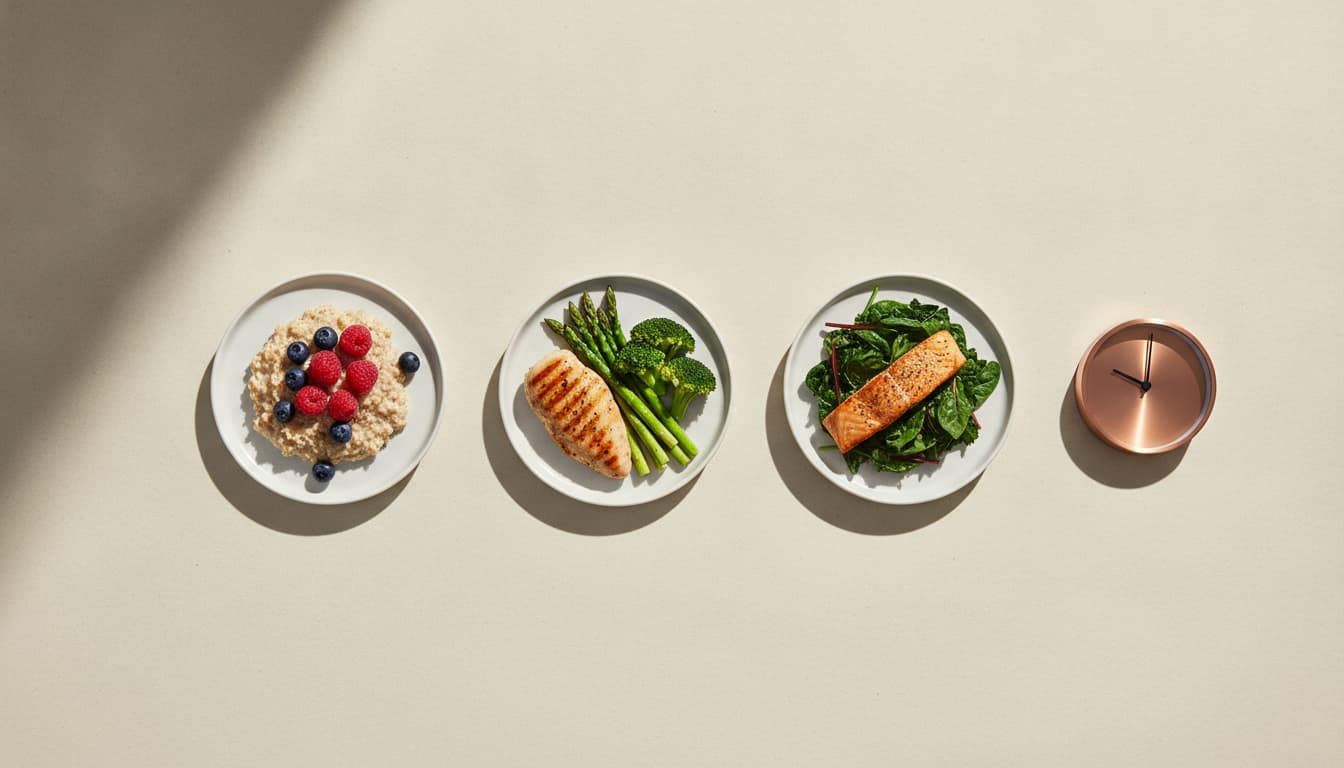
There is no metabolically ideal number of meals: total daily calories and protein matter far more than how you split them. Eating more often does not raise metabolism. Why three to four meals suits most people, what protein timing actually adds, and when meal frequency matters.
What people ask us next.
- How many meals a day is best?
- There is no single best number. At matched calories and protein, three meals and six meals produce the same weight and body-composition results, because eating more often does not raise metabolism (Bellisle et al. 1997). Most people do well with three to four meals, which is enough to spread protein for the modest muscle benefit while keeping eating occasions manageable. The right number is the one you can keep to consistently, so choose based on appetite and schedule rather than on any metabolic theory.
- Does eating more often boost your metabolism?
- No. This is the most common meal-frequency myth. Digestion does burn energy through the thermic effect of food, but that cost depends on the total calories and protein you eat over the day, not on how many meals you split them into, so 2,000 calories burns the same in three meals or six (Bellisle et al. 1997). Controlled studies find no difference in 24-hour energy expenditure between high and low meal frequencies. Eating more often does not speed up metabolism or accelerate fat loss.
- Is it better to eat 3 big meals or 6 small meals?
- For weight and metabolism it makes no difference at matched calories, so it comes down to preference and appetite control. Three larger meals tend to be more satiating per sitting and involve fewer decisions and fewer chances to overeat, while six smaller meals suit people who prefer to avoid strong hunger. The one advantage of splitting is protein distribution: getting protein across three to four meals stimulates muscle synthesis slightly better than one or two. Beyond that, pick the pattern you can sustain.
- How many meals a day should I eat to lose weight?
- There is no special meal number for weight loss; fat loss comes from a calorie deficit, and that deficit works the same whether delivered in two, three, or six meals. Randomized studies show no fat-loss advantage to eating more often at matched calories. Choose the frequency that makes it easiest for you to stay in a deficit and hit your protein target: for many people that is three meals with little snacking, since fewer eating occasions mean fewer chances to overeat, but the best pattern is the one you can maintain.
- Is skipping breakfast bad for you?
- Not inherently. The old claim that skipping breakfast harms metabolism does not hold up in controlled studies; breakfast's main effect is on how hunger and calories distribute across the rest of the day. It helps people who otherwise get overly hungry and overeat later, and it is unnecessary for those who feel fine without it. What matters is the day's total calories and protein, not whether they include a morning meal, so breakfast is a personal preference rather than a metabolic requirement.
- Should I eat every 2 to 3 hours?
- There is no metabolic need to. Eating on a fixed short interval does not raise metabolism or improve fat loss compared with fewer meals at the same total calories. Frequent eating can help people who prefer smaller portions or who need to spread a high protein intake, but it also creates more opportunities to overeat, and snacking often skews toward calorie-dense foods. Unless you have a specific reason such as managing blood sugar or fitting in a large protein target, meal spacing is a matter of preference, not a rule.
Every claim, cited.
- [01]Bellisle F, McDevitt R, Prentice AM. 1997. Meal frequency and energy balance. British Journal of Nutrition 77(Suppl 1):S57-70. No effect of meal frequency on total energy expenditure at matched intake.
- [02]Schoenfeld BJ, Aragon AA. 2018. How much protein can the body use in a single meal for muscle-building? Journal of the International Society of Sports Nutrition 15:10. Per-meal protein dose of ~0.4 g/kg and the case for spreading protein across meals.
- [03]Leidy HJ, Campbell WW. 2011. The effect of eating frequency on appetite control and food intake. Journal of Nutrition 141(1):154-157. Meal frequency and appetite; no clear benefit of increased frequency.
- [04]Kahleova H, Lloren JI, Mashchak A, et al. 2017. Meal frequency and timing are associated with changes in body mass index (Adventist Health Study 2). Journal of Nutrition 147(9):1722-1728. Observational links between eating occasions, breakfast, and body weight.
The Larderlab Team builds evidence-led frameworks for eating, lifting, and stocking a kitchen. We cite every claim. We publish the spreadsheet when possible. We buy what we review at retail price. When new data lands, we revise with a dated note.
Next in this hub.
Does Avocado Have Protein? The USDA Number, and the Per-Calorie Math
USDA lists 2.0 g of protein per 100 g of raw avocado, at 160 kcal. That is 1.25 g of protein per 100 kcal, against 18.8 g per 100 kcal for roasted chicken breast. The numbers, and what avocado is actually dense in.
7 min · rev 2026-08-20How Much Protein Per Meal? The Per-Sitting Number, by the Evidence
The muscle-building response peaks at about 0.4 g of protein per kg of body weight per meal, roughly 25-40 g for most adults. The per-meal number, why splitting protein across the day beats one large dose, and how to hit it.
8 min · rev 2026-07-21Best Protein Powders Ranked by $/gram of Leucine
We ranked 14 protein powders by the metric that actually matters, cost per gram of leucine delivered, with third-party testing filters.
14 min · rev 2026-04-21Get the Larderlab Macro Planner.
A Google Sheet that calculates your protein target, splits it across 3-5 meals, and ranks 20 protein sources by $/gram. Free. Copy-and-modify your own version.
By subscribing, you agree to our Privacy Policy. Unsubscribe anytime.