Foods high in polyphenols, ranked by milligrams
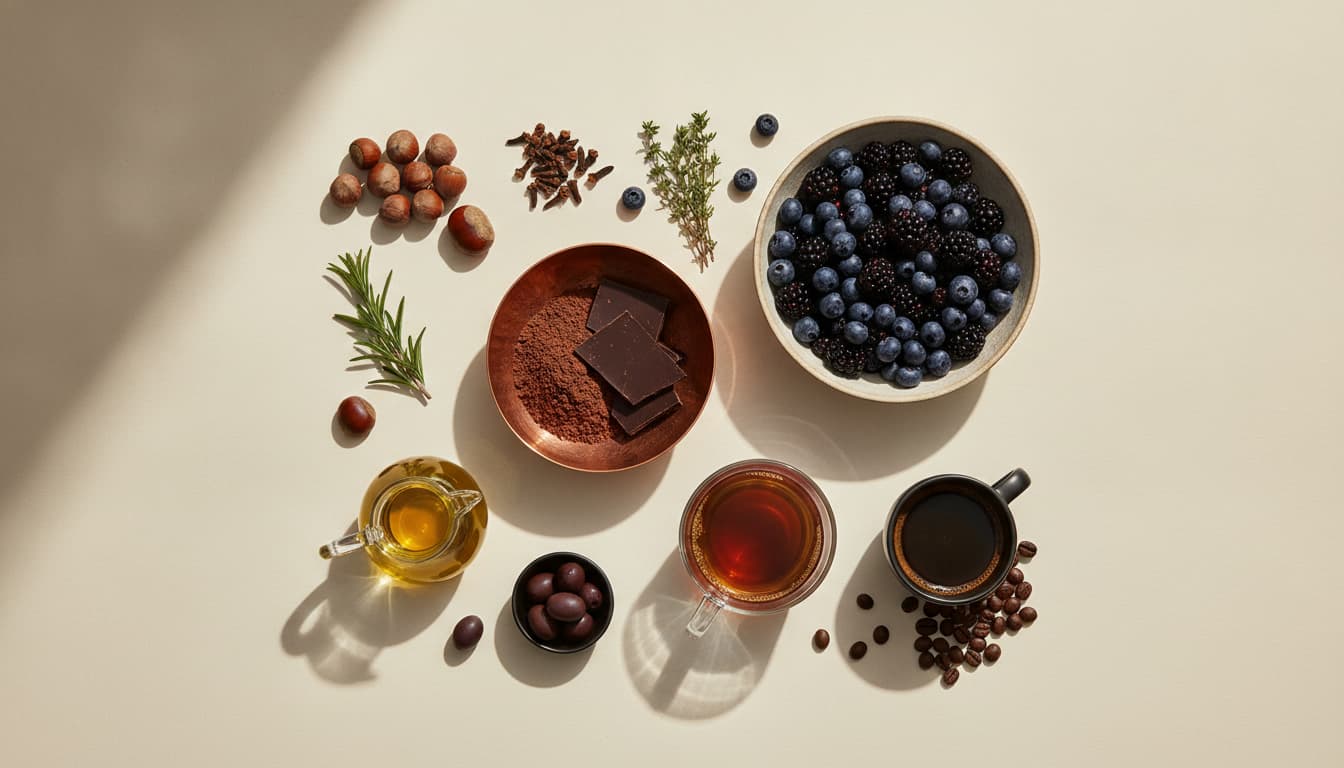
Polyphenols are plant compounds measured in milligrams per 100 grams, and spices, cocoa, berries, coffee, and tea top the charts. The density ranking, why coffee is most people's biggest single source, and why the benefit tracks whole foods rather than extract pills.
- 01
Dried spices and herbs: densest by weight, small servings
Cloves top the Phenol-Explorer database at extraordinarily high polyphenol values per 100 grams, followed by star anise, dried peppermint, oregano, and other dried herbs (Phenol-Explorer). By density they win outright, but the catch is portion size: a pinch of cloves or a teaspoon of oregano weighs almost nothing, so the total contribution to daily intake is modest. They are still worth using generously for flavor and their concentrated compounds, but they are not the workhorses of polyphenol intake the way coffee or berries are.
- 02
Cocoa and dark chocolate
Cocoa powder and dark chocolate are among the densest everyday polyphenol sources, rich in flavanols, the same class found in tea (Phenol-Explorer). The darker the chocolate and the less alkalized (Dutch-processed) the cocoa, the more polyphenols survive, since alkalizing destroys a large share. This is the compound class behind the cardiovascular signals seen in cocoa studies, though the sugar and fat in most chocolate mean it is a source to enjoy in moderation, and unsweetened cocoa is the more concentrated option.
- 03
Berries: elderberry, blackcurrant, blueberry, blackberry
Dark berries are the fruit leaders, packed with anthocyanins, the pigments that give them their color and a large share of their polyphenol content (Phenol-Explorer). Elderberry and blackcurrant are especially dense, with blueberries and blackberries close behind. Berries combine their polyphenols with fiber and vitamin C at a relatively low sugar load, which is why they feature so heavily in diets associated with better metabolic and cardiovascular outcomes. Frozen berries retain their polyphenols well, so they are a practical year-round source.
- 04
Coffee and tea: most people's biggest source
Coffee is exceptionally rich in phenolic acids, and green and black tea in flavanols, and together they are the single largest source of polyphenols in many people's diets, not because they are the densest but because of the sheer volume consumed (Phenol-Explorer; EFSA). A few cups of coffee or tea a day can supply more total polyphenols than any solid food. This is a large part of why moderate coffee and tea consumption is consistently associated with favorable health outcomes in observational research.
- 05
Olive oil, olives, nuts, and flaxseed
Extra-virgin olive oil and whole olives carry distinctive polyphenols like oleocanthal and hydroxytyrosol, nuts (especially chestnuts and hazelnuts) contribute more, and flaxseed is the richest common source of lignans (Phenol-Explorer). These are core components of the Mediterranean diet, the eating pattern most strongly linked to cardiovascular benefit, and their polyphenols are part of why extra-virgin olive oil, in particular, outperforms refined oils. Choosing extra-virgin over refined and buying it fresh preserves the polyphenol content.
- 06
Why whole foods beat extract pills
The old idea that polyphenols work as direct free-radical scavengers has been largely revised: most are poorly absorbed, and their benefits appear to come from gut-bacteria metabolites and signaling effects (EFSA). This helps explain why polyphenol-rich whole-food diets like the Mediterranean pattern are consistently linked to better heart and metabolic health, while isolated single-polyphenol supplements have mostly disappointed in trials, and some, such as high-dose green tea extract, carry a real risk of liver toxicity. The evidence supports food and drink, not pills.
How this was specified
- 01Inputs measured
- Retail price (dated) · label claim · Certificate of Analysis · third-party test (Informed Sport / NSF / ConsumerLab / Clean Label) · leucine per serving from COA, not marketing.
- 02Protocols tested
- Per-kg target from four literature ranges (IOM RDA, Phillips 2017, Morton 2018, ISSN). Brands scored against Moore 2015 leucine-per-dose threshold (~0.4 g/kg).
- 03Cost-basis verified
- $/gram of protein and $/gram of leucine at warehouse pricing (Costco), mail-order (Amazon), and DTC retail. Re-checked quarterly, flagged when drift exceeds 15%.
- 04Confidence level
- High on ranked order. Medium on absolute $/g (prices drift). Low on serving-size claims where COA is older than 18 months, flagged [VERIFY].
Every claim, cited.
The Larderlab Team builds evidence-led frameworks for eating, lifting, and stocking a kitchen. We cite every claim. We publish the spreadsheet when possible. We buy what we review at retail price. When new data lands, we revise with a dated note.
Next in this hub.
Foods High in Oxalates: The Densest Sources, by Milligrams
Spinach is the outlier at roughly 700 mg per cooked half cup, followed by rhubarb, Swiss chard, almonds, and beets. The mg-per-serving ranking, why boiling and a little calcium cut absorption, and who actually needs to care about oxalate.
9 min · rev 2026-08-04Foods High in Thiamin (Vitamin B1): The Densest Sources, by Milligrams
The RDA is 1.2 mg a day for men and 1.1 mg for women, and pork, fortified grains, legumes, and sunflower seeds cover it easily. The mg-per-serving ranking, why refined grains are fortified for a reason, and who is actually at risk of deficiency.
7 min · rev 2026-08-14Foods High in Riboflavin (Vitamin B2): The Densest Sources, by Milligrams
The RDA is 1.3 mg a day for men and 1.1 mg for women, and dairy, eggs, organ meats, and fortified cereals cover it easily. The mg-per-serving ranking, why milk in clear bottles loses it, and why bright yellow urine is nothing to worry about.
7 min · rev 2026-08-14Get the Larderlab Macro Planner.
A Google Sheet that calculates your protein target, splits it across 3-5 meals, and ranks 20 protein sources by $/gram. Free. Copy-and-modify your own version.
By subscribing, you agree to our Privacy Policy. Unsubscribe anytime.