Foods high in lectins, and what the evidence actually says
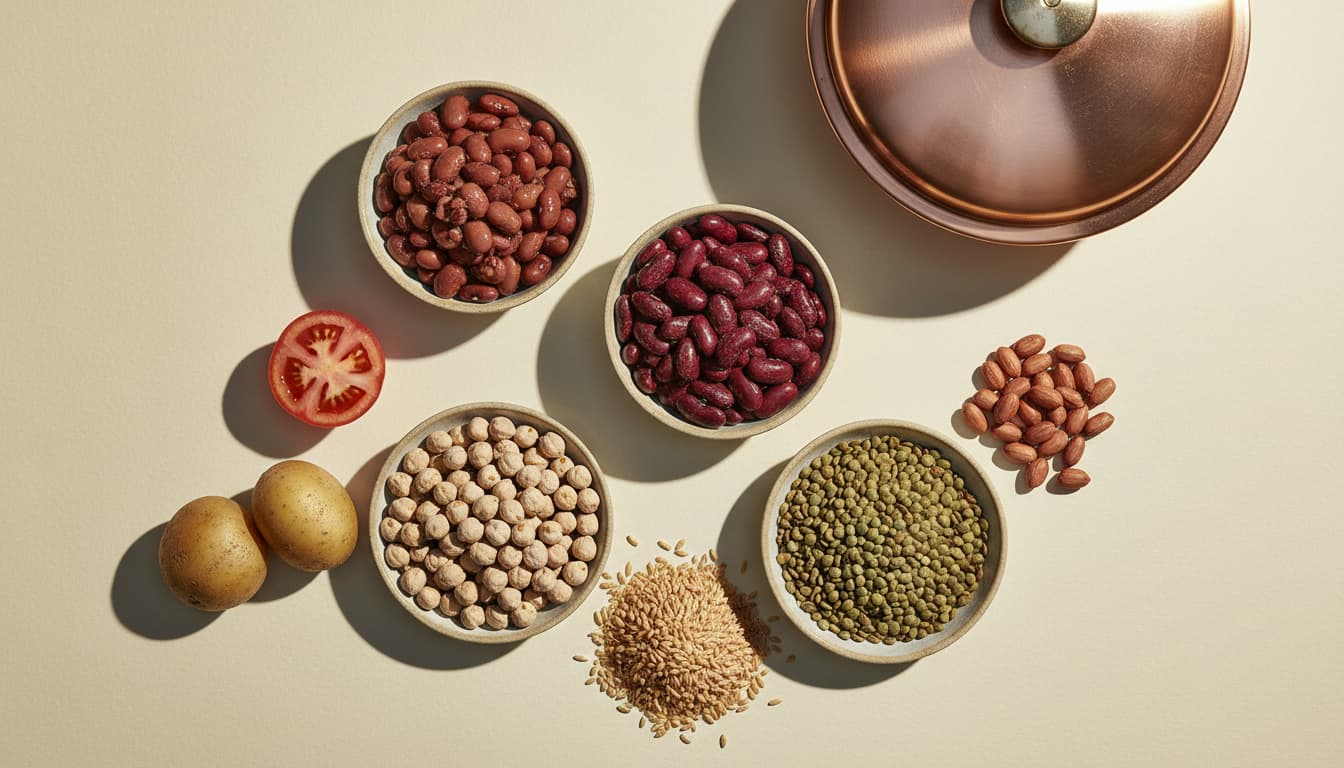
Lectins are proteins in beans, grains, and nightshades, and raw kidney beans really can make you sick, but cooking destroys them. The ranking, why the anti-lectin diet overstates the danger, and why most high-lectin foods are among the healthiest.
- 01
Raw kidney beans: the one genuine risk
Raw and undercooked red kidney beans are the one high-lectin food that poses a real, acute risk, because they contain phytohaemagglutinin, a lectin that can cause nausea, vomiting, and diarrhea within hours, sometimes from as few as four or five beans (Harvard; FDA). The critical detail is temperature: the beans must be boiled, because low-temperature slow-cooking can actually concentrate the toxin rather than destroy it. Properly soaked and boiled, kidney beans are safe and highly nutritious, which is how they are eaten around the world.
- 02
Other legumes: soybeans, lentils, peanuts
Soybeans, lentils, chickpeas, and peanuts all contain lectins, though in less dangerous forms than raw kidney beans (peer-reviewed literature). Soaking and cooking destroy the great majority of the active lectins, and canned legumes are already cooked and safe. These are among the most nutritious foods available, rich in plant protein, fiber, and minerals, and linked to better long-term health, so the sensible approach is thorough cooking rather than avoidance. Peanuts are typically roasted, which reduces their lectins.
- 03
Whole grains and wheat germ agglutinin
Whole grains, particularly wheat, contain lectins such as wheat germ agglutinin, which is often singled out by anti-lectin advocates (peer-reviewed literature). But cooking substantially reduces active lectins, and the human evidence that the small amounts in cooked whole grains cause harm is weak. Whole grains are consistently associated with lower rates of heart disease and type 2 diabetes, so their lectin content has to be weighed against a strong record of benefit rather than treated as a reason to avoid them.
- 04
Nightshades: tomatoes, potatoes, eggplant, peppers
Nightshade vegetables, tomatoes, potatoes, eggplant, and peppers, contain lectins and are frequently targeted by anti-lectin diets (Harvard). As with the others, normal cooking reduces the active lectins, and these vegetables are nutrient-dense sources of vitamins, potassium, and antioxidants. Some people with specific conditions report sensitivity to nightshades, which is a reasonable individual experiment, but for the general population there is no strong evidence that their lectin content causes harm, and they remain healthy foods.
- 05
Why cooking, soaking, and fermenting solve it
The single most important fact about lectins is that ordinary food preparation largely neutralizes them: soaking dried beans and then boiling them destroys almost all active lectins, canning does the same, and sprouting and fermenting reduce them further (Harvard; peer-reviewed literature). This is why traditional cooking methods, which always involved soaking and thorough cooking of beans and grains, evolved to handle lectins long before they were named. For anyone eating these foods cooked, as almost everyone does, the lectin content is not a meaningful concern.
- 06
Why the anti-lectin diet overstates the danger
The popular anti-lectin diet claims lectins drive weight gain and chronic disease, but the human evidence that dietary lectins from properly cooked foods cause meaningful harm is weak (Harvard). Meanwhile the foods being demonized, beans, lentils, whole grains, tomatoes, are among the most consistently health-associated foods in nutrition research, central to the Mediterranean and other longevity diets. Some individuals with certain conditions may feel better reducing specific high-lectin foods, but that is a personal experiment, not a population-wide rule, and for most people these foods are strongly beneficial.
How this was specified
- 01Inputs measured
- Retail price (dated) · label claim · Certificate of Analysis · third-party test (Informed Sport / NSF / ConsumerLab / Clean Label) · leucine per serving from COA, not marketing.
- 02Protocols tested
- Per-kg target from four literature ranges (IOM RDA, Phillips 2017, Morton 2018, ISSN). Brands scored against Moore 2015 leucine-per-dose threshold (~0.4 g/kg).
- 03Cost-basis verified
- $/gram of protein and $/gram of leucine at warehouse pricing (Costco), mail-order (Amazon), and DTC retail. Re-checked quarterly, flagged when drift exceeds 15%.
- 04Confidence level
- High on ranked order. Medium on absolute $/g (prices drift). Low on serving-size claims where COA is older than 18 months, flagged [VERIFY].
Every claim, cited.
The Larderlab Team builds evidence-led frameworks for eating, lifting, and stocking a kitchen. We cite every claim. We publish the spreadsheet when possible. We buy what we review at retail price. When new data lands, we revise with a dated note.
Next in this hub.
Foods High in Glutathione: Why You Cannot Really Eat Your Way to More
Glutathione is the body's own master antioxidant, but the glutathione in food is largely broken down before absorption. The foods that contain it, why the sulfur-amino-acid precursors matter more, and what the evidence says about boosting your own levels.
8 min · rev 2026-08-14Foods High in Collagen: Why the Real List Is Shorter Than You Think
Collagen exists only in animal connective tissue, so no plant food contains any. Gelatin powder leads at 85.6 g of protein per 100 g, pork skin at 61.3 g. And the most-marketed source, bone broth, tested poorly against supplements.
8 min · rev 2026-08-24Foods High in Nitrates: The Vegetables That Boost Nitric Oxide
Dietary nitrates from vegetables convert to nitric oxide, which relaxes blood vessels and can lower blood pressure and aid exercise. The ranking led by beetroot and leafy greens, why vegetable nitrates are healthy while processed-meat nitrates are not, and what the beet-juice evidence shows.
8 min · rev 2026-08-12Get the Larderlab Macro Planner.
A Google Sheet that calculates your protein target, splits it across 3-5 meals, and ranks 20 protein sources by $/gram. Free. Copy-and-modify your own version.
By subscribing, you agree to our Privacy Policy. Unsubscribe anytime.