How to get electrolytes, from food and a DIY drink
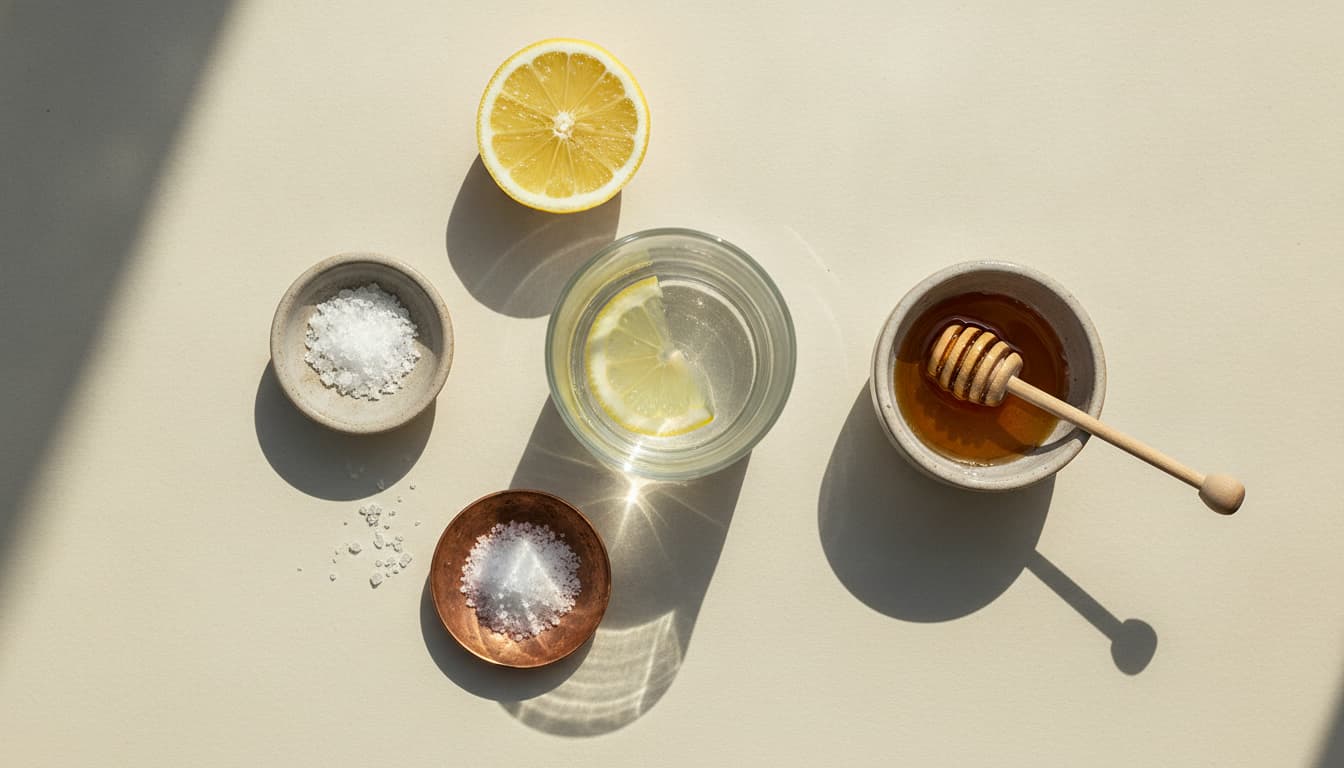
Most people get enough electrolytes from food; you only need extra with heavy sweating, illness, low-carb diets, or fasting. The food sources, a DIY drink recipe with real numbers, and when a powder is worth it.
What people ask us next.
- How do I get electrolytes naturally?
- From ordinary food. Sodium from salt, broth, olives, and cheese; potassium from potatoes, beans, yogurt, and leafy greens; magnesium from pumpkin seeds, spinach, and beans; calcium from dairy and fortified foods. For most people this fully covers electrolyte needs, since the common intake problem is too much sodium and too little potassium, not deficiency (NIH ODS). A salty broth plus a potassium-rich food restores more than most specialized products.
- Do I actually need an electrolyte drink every day?
- For everyday life, no. A moderately-active person eating normally gets enough electrolytes from food and water. Deliberate replacement is worth it in four situations: heavy or prolonged sweating, illness with vomiting or diarrhea, a low-carb or ketogenic diet, or extended fasting. Outside those, a daily electrolyte drink is convenience or marketing, not a physiological requirement.
- How do I make an electrolyte drink at home?
- Dissolve about 1/4 teaspoon of table salt (roughly 575 mg sodium) in 500 mL of water, add a squeeze of citrus for flavor and a little potassium, and optionally a pinch of potassium chloride (lite salt). Add a spoon of sugar or honey if you want carbohydrate, since glucose and sodium share a gut transporter and are absorbed together with water. Scale the salt up for heavy sweating and down if you are managing blood pressure.
- Which electrolyte matters most when I sweat?
- Sodium. Sweat contains roughly 0.5-1.5 g of sodium per liter, while potassium losses are small (Baker 2019). That is why plain water after a long, hot session can leave you feeling flat, and why replacing sodium, with a pinch of salt or a salty snack, is the priority during heavy-sweat rehydration. Potassium, magnesium, and calcium are secondary and are usually well covered by food.
- What is the WHO oral rehydration solution?
- It is the clinical standard for rehydrating during diarrhea, and a useful template for a balanced electrolyte drink. The reduced-osmolarity formula is 2.6 g sodium chloride, 1.5 g potassium chloride, 13.5 g glucose, and 2.9 g trisodium citrate per liter (WHO/UNICEF). The glucose is essential: it drives sodium and water absorption through a shared gut transporter, which is why effective rehydration drinks pair sodium with a little sugar rather than sodium alone.
- Is a homemade electrolyte drink as good as a commercial powder?
- For most purposes, yes, at a fraction of the cost. A pinch of salt, a potassium source, water, and a little sugar covers the same needs a branded powder does. What a commercial powder buys is convenience and a precise, consistent dose, which some people prefer. If you want to compare, our best electrolyte powders ranking sorts tested products by $/serving so you can weigh the convenience against the pennies a DIY version costs.
Every claim, cited.
- [01]World Health Organization / UNICEF. Oral rehydration salts: reduced-osmolarity formulation. Per liter: 2.6 g sodium chloride, 1.5 g potassium chloride, 13.5 g glucose, 2.9 g trisodium citrate.
- [02]Baker LB. 2019. Physiology of sweat gland function: the roles of sweating and sweat composition in human health. Temperature 6(3):211-259. Sweat sodium ~0.5-1.5 g/L; potassium losses small.
- [03]NIH Office of Dietary Supplements. Sodium and Potassium fact sheets. Most people exceed sodium recommendations and fall short on potassium.
- [04]Shirreffs SM, Sawka MN. 2011. Fluid and electrolyte needs for training, competition, and recovery. J Sports Sci 29 Suppl 1:S39-46. Sodium is the primary electrolyte to replace during and after heavy sweating.
The Larderlab Team builds evidence-led frameworks for eating, lifting, and stocking a kitchen. We cite every claim. We publish the spreadsheet when possible. We buy what we review at retail price. When new data lands, we revise with a dated note.
Next in this hub.
What to Avoid When Taking Collagen: Five Caveats With Evidence Behind Them
Do not count it toward your protein target, do not judge it before 8 to 12 weeks, and if you form kidney stones, know that 30 g of gelatin raised urinary oxalate by 43 percent in a controlled study. The real caveats, and the myths.
8 min · rev 2026-08-24Foods High in Collagen: Why the Real List Is Shorter Than You Think
Collagen exists only in animal connective tissue, so no plant food contains any. Gelatin powder leads at 85.6 g of protein per 100 g, pork skin at 61.3 g. And the most-marketed source, bone broth, tested poorly against supplements.
8 min · rev 2026-08-24Ashwagandha Benefits: What the Trials Show, and the Liver Signal
Pooled across 12 trials in 1,002 people, stress fell with a standardised mean difference of 1.75 and anxiety by 1.55, but heterogeneity was above 83 percent and the certainty of evidence was rated low. The dose that was tested, and the hepatic case series.
8 min · rev 2026-08-24Get the Larderlab Macro Planner.
A Google Sheet that calculates your protein target, splits it across 3-5 meals, and ranks 20 protein sources by $/gram. Free. Copy-and-modify your own version.
By subscribing, you agree to our Privacy Policy. Unsubscribe anytime.