What electrolytes are, and what they actually do
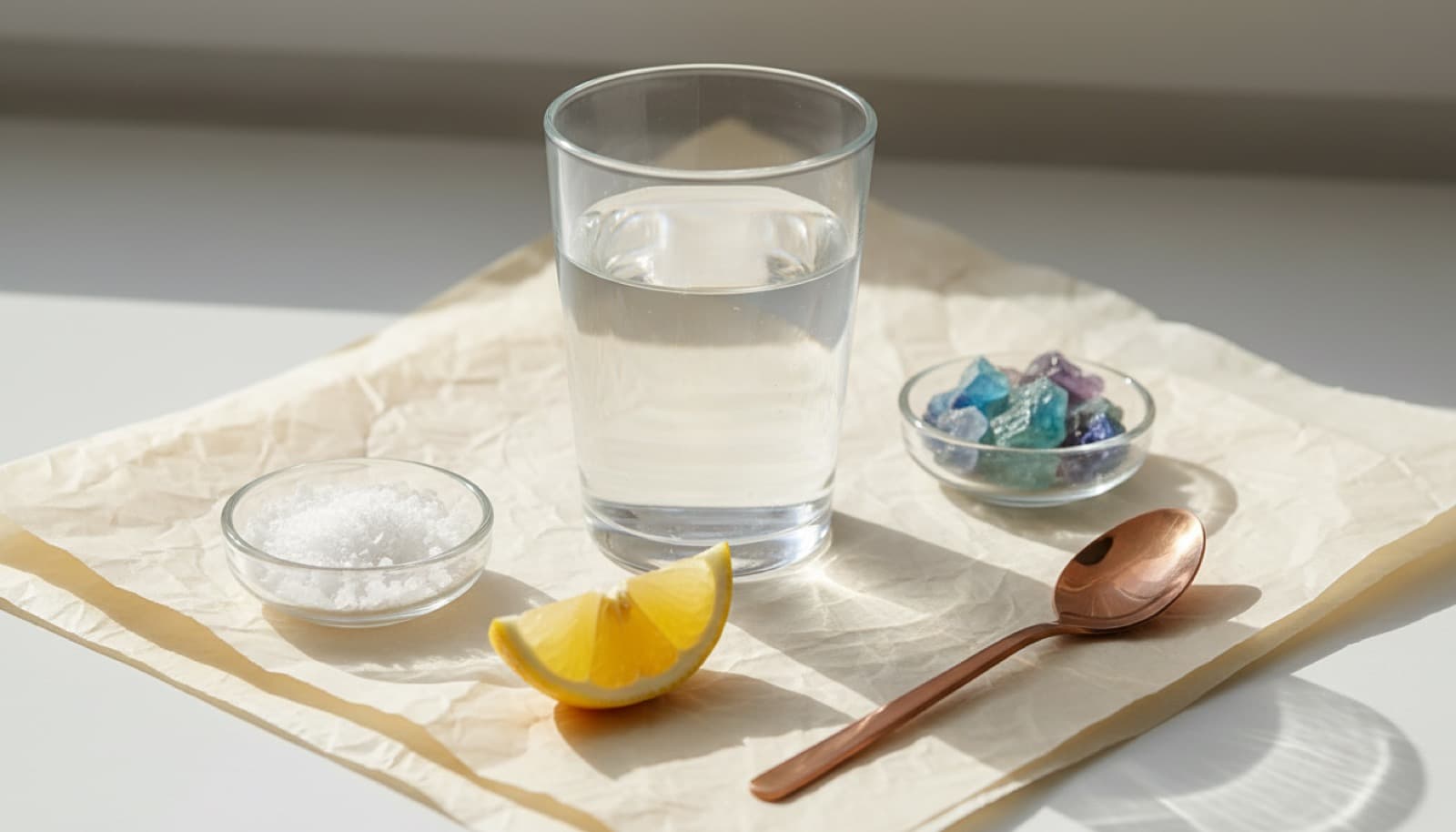
Electrolytes are charged minerals, sodium, potassium, magnesium, chloride, that run hydration, nerve signaling, and muscle contraction. What they do and how much you need.
- 01
They are charged minerals dissolved in body fluid
An electrolyte is a mineral that dissociates into ions, carrying a positive or negative charge, when dissolved in water. The main ones are sodium, potassium, chloride, magnesium, calcium, and bicarbonate (IOM 2005). The charge lets them conduct the electrical signals the body runs on. This is the definition that makes the rest of their functions make sense: without charge, no nerve impulse and no muscle contraction.
- 02
Sodium controls fluid balance
Sodium is the primary determinant of extracellular fluid volume. Where sodium goes, water follows, so the body uses sodium to regulate blood volume and blood pressure (IOM 2005). This is why replacing sodium, not just drinking water, matters during heavy sweat loss: drinking plain water without sodium can dilute blood sodium and, in extreme endurance cases, cause hyponatremia.
- 03
Sodium and potassium fire nerves and contract muscle
Nerve impulses and muscle contractions run on the movement of sodium into cells and potassium out, the action potential. The sodium-potassium pump maintains the gradient that makes this possible. When sodium or potassium is badly depleted, signaling falters, which is the mechanism behind cramping, weakness, and, in severe cases, cardiac arrhythmia. Potassium intake is chronically low in Western diets, the opposite problem from sodium (IOM 2005).
- 04
Magnesium and calcium round out the set
Magnesium and calcium are electrolytes too. Calcium triggers muscle contraction and clots blood; magnesium opposes calcium to allow muscle relaxation and stabilizes nerve excitability. They are present in electrolyte products in small amounts, but the dose in a typical serving is far below the daily requirement, so a powder is not a meaningful magnesium or calcium source. For magnesium specifically, food and a dedicated supplement do the real work.
- 05
When you actually need to replace them
For a sedentary person eating normally, the kidneys keep electrolytes balanced and no supplement is needed. The genuine depletion scenarios are: prolonged sweating (endurance exercise over ~60-90 minutes, hot-weather work), vomiting or diarrhea, and low-carb or fasting states where sodium excretion rises. Sodium is the priority replacement in all three; potassium and magnesium are secondary.
- 06
The cost-aware way to replace sodium
Sodium is the active ingredient most readers under-dose, and it is cheap. A homemade mix of ~1/4 teaspoon table salt (~500 mg sodium) plus a small amount of potassium chloride salt-substitute in water matches the electrolyte profile of a branded stick pack at roughly a fifth of the cost. If you prefer a ready product for taste and convenience, our electrolyte powder ranking compares the major brands by $/mg of sodium.
What people ask us next.
- What are electrolytes, in plain terms?
- Charged minerals dissolved in your body fluid, mainly sodium, potassium, chloride, magnesium, and calcium (IOM 2005). The charge lets them conduct electrical signals, which is how nerves fire and muscles contract. Sodium also controls how much water stays in your blood. They are essential, but a normal diet plus working kidneys keeps them balanced without a supplement.
- What do electrolytes do?
- Three core jobs: control fluid balance (mostly sodium), fire nerve impulses and contract muscle (sodium and potassium across cell membranes), and support clotting and muscle relaxation (calcium and magnesium). Depletion shows up as cramps, weakness, and fatigue, and in severe cases as dangerous heart rhythm changes.
- Do I need an electrolyte supplement?
- Usually not. A sedentary person eating a normal diet maintains electrolyte balance automatically through the kidneys. You need to actively replace electrolytes during prolonged sweating (endurance exercise, hot-weather work), vomiting or diarrhea, or low-carb and fasting states. Sodium is the priority in all of those.
- Which electrolyte do most people under-replace?
- Sodium, during heavy sweat loss. People often drink plain water, which replaces fluid but dilutes sodium further, the opposite of what is needed and, taken to an extreme in endurance events, a cause of hyponatremia. Potassium is chronically low in Western diets generally, but during acute sweat loss sodium is the one to prioritize.
- Can I make my own electrolyte drink?
- Yes, and it is far cheaper. About 1/4 teaspoon of table salt (~500 mg sodium) plus a pinch of potassium-chloride salt substitute in water delivers the same active electrolytes as a branded stick pack. Our electrolyte powder ranking shows that DIY costs roughly a fifth of branded stick packs per mg of sodium, with an identical profile.
- Are sports drinks a good electrolyte source?
- They contain electrolytes but are built around sugar and are usually low in sodium relative to what heavy sweaters need. A standard sports drink has ~110 mg sodium per cup, well below the ~500-1000 mg per serving in dedicated electrolyte products. For sweat replacement, a higher-sodium powder or a DIY mix is more targeted; for casual hydration, plain water and food are enough.
Every claim, cited.
- [01]Institute of Medicine. 2005. Dietary Reference Intakes for Water, Potassium, Sodium, Chloride, and Sulfate. National Academies Press. Roles and requirements of the major electrolytes.
- [02]NIH Office of Dietary Supplements. Potassium Fact Sheet for Health Professionals. Potassium intake gaps and physiological role.
- [03]Sawka MN, Burke LM, Eichner ER, et al. 2007. American College of Sports Medicine position stand: exercise and fluid replacement. Med Sci Sports Exerc 39(2):377-390. Sodium replacement during prolonged sweating.
- [04]Hew-Butler T, Rosner MH, Fowkes-Godek S, et al. 2015. Statement of the Third International Exercise-Associated Hyponatremia Consensus. Clin J Sport Med 25(4):303-320. Overdrinking plain water and dilutional hyponatremia.
The Larderlab Team builds evidence-led frameworks for eating, lifting, and stocking a kitchen. We cite every claim. We publish the spreadsheet when possible. We buy what we review at retail price. When new data lands, we revise with a dated note.
Next in this hub.
Does Gatorade Have Electrolytes? The Milligrams Per Bottle, Compared
Yes: about 460 mg of sodium and 130 mg of potassium per litre, per USDA branded data. Set against an American football player losing sodium at roughly 1,290 mg an hour, the numbers explain what it is and is not for.
8 min · rev 2026-08-20How to Get Electrolytes: Food, DIY Drinks, and When You Need More
Most people get enough electrolytes from food; you only need extra with heavy sweating, illness, low-carb diets, or fasting. The food sources, a DIY drink recipe with real numbers, and when a powder is worth it.
8 min · rev 2026-07-16Best Electrolyte Powders, 2026: Ranked by $/mg of Sodium
Eight electrolyte powders ranked on cost-per-mg of sodium, the actual ingredient most consumers under-dose. LMNT, Liquid IV, Re-Lyte, and 5 alternatives, with the failure modes nobody publishes.
11 min · rev 2026-04-29Get the Larderlab Macro Planner.
A Google Sheet that calculates your protein target, splits it across 3-5 meals, and ranks 20 protein sources by $/gram. Free. Copy-and-modify your own version.
By subscribing, you agree to our Privacy Policy. Unsubscribe anytime.